02 The deliverable
One packet. Every decision already made.
A brand system is the written-down version of your visual identity, plus the working files that implement it. You are not buying a look. You are buying the end of the argument about the look — a single place where the answer lives, so any designer, developer, printer, or employee who touches your brand next produces something consistent without asking you.
- The mark, as a family
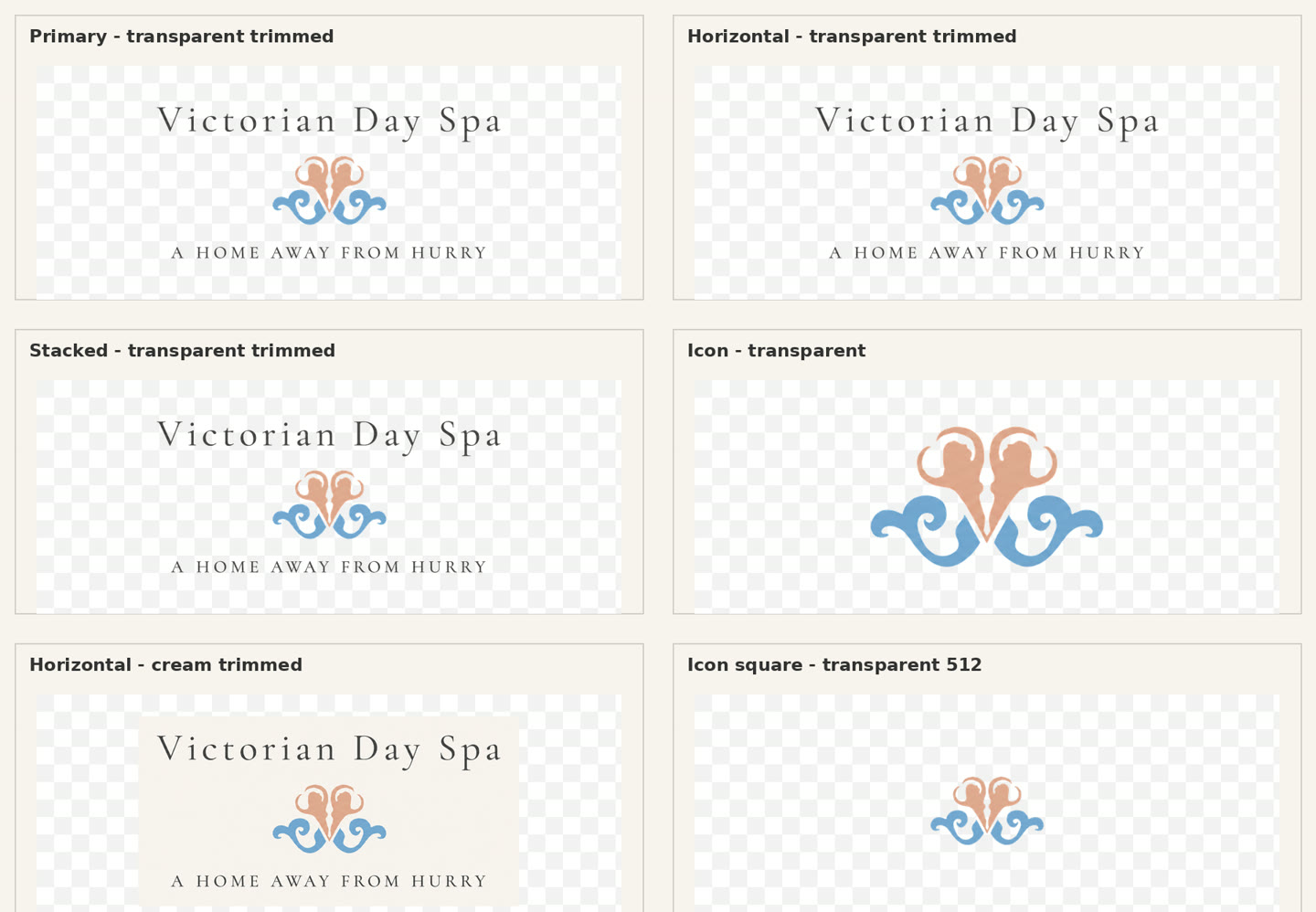
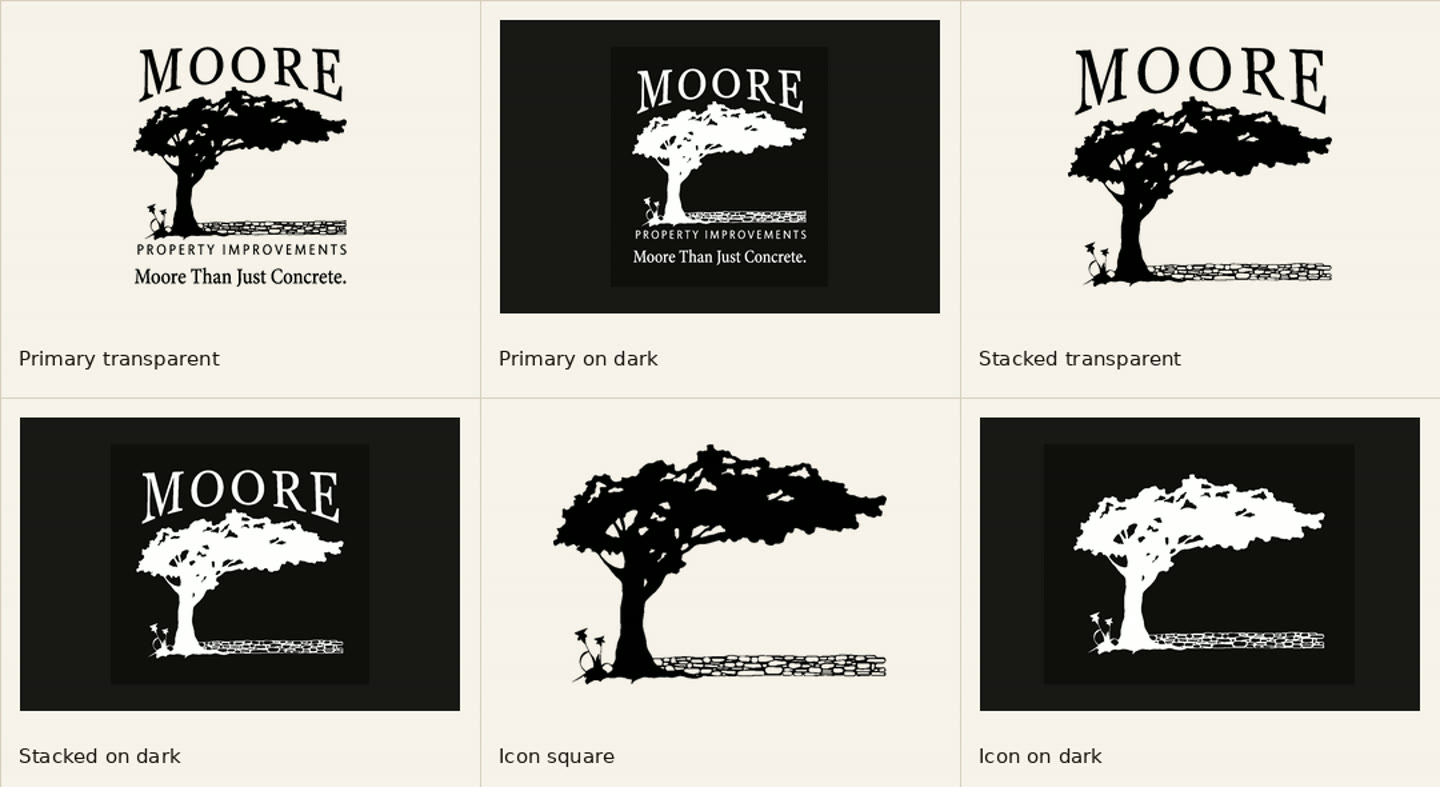
- Not one logo file — the full set. Primary lockup, horizontal version for narrow spaces, stacked version, icon-only mark for avatars and favicons, and light-on-dark reversals of each. Transparent backgrounds, trimmed to the artwork, exported at the sizes you will actually need. Plus a one-page usage note: which file goes where, minimum size, how much clear space, and what not to do.
- The palette, with roles
- Every color gets a name, a hex value, and a job — this one is the page ground, this one is body text, this one is the button, this one is the accent you use sparingly. We write down the rough ratio of ground to ink to accent, and we write down the colors we ruled out, so nobody quietly reintroduces them in six months. Contrast is checked against accessibility guidelines before a color is approved for text.
- The type system
- A display face for headlines, a face for labels and navigation, and a face for body copy — each with its role, sizes, letterspacing, and weights. Licensing is checked and stated: whether a face can legally be embedded on your website, and what the web-safe substitute is if it cannot. That last part matters more than it sounds. A type system that cannot be licensed for the web is a system that will silently break the first time it is used online.
- The asset library
- The supporting artwork that makes a brand feel deep rather than thin: background washes and textures, botanical or industrial line work, the small symbols that mark sections and services, arch and rule motifs. Vector where it can be vector. This is the difference between a brand you can build twenty pages with and a brand that runs out after the homepage.
- The applied templates
- The system shown working, not just described: page layouts, a document or menu format, an email header. These serve two purposes — they prove the system holds up under real content, and they give whoever comes next a pattern to copy instead of a blank page.
- The written record
- Color and typography specification files, an asset manifest listing every file with its source and license status, and an honest status label on each item: approved, interim, or needs rework. If something is a placeholder, it is labeled a placeholder. You always know what you can put in front of a customer today and what is still in progress.
Everything arrives in a dated, organized folder structure. You own the files.